Showing posts with label history. Show all posts

Monday, January 18, 2021

#FunWithMath part one - Minimum Wage Vs. College Tuition

 There has been lots of talk about raising the minimum wage to $15.  I have done a number of calculations about this - not to prove or disprove any one side, but just to show the math behind the numbers.  This will be a multi-part series with the end-goal of education - There will be math and math always evokes emotion.  I'm curious what questions come up. Please let me know .

My son is about to graduate college. He is at a two-year private trade school. I knew the cost of secondary education had gone up since I last attended, but it wasn't until I did the math that I realized how much it went up.  What baffled me was the rate that it went up when compared to the federal minimum wage.  Here is a chart of what I mean:

Let me interpret some of this for you.  The first three columns are data sets - year, the federal minimum wage, and the average cost of a 4-year public college per year.  I used values published by USA Today, but also found comparable numbers on other sites. 

That fourth column is the eye-opening one for me. That is how many hours a student would have to work to pay off a yearly tuition bill.  It is then broken into that student working either 40 or 50 weeks of the year. 

What this means: Back in 1980 a college student would have had to work 20 hours per week for 40 weeks to pay off their college tuition bill.  By 1990 it was 33 hours. By the year 2000 it was 41 hours.  Today it is 77 hours.... yes...  a student would have to work 77 hours PER WEEK for 40 weeks, or 62 hours PER WEEK for 50 weeks, to pay off their college tuition that year.  This would be on top of going to college classes, completing homework and labs, and other educational duties. 

What happens if we increase minimum wage to $15 per hour? The numbers of hours needed to work drops to 30 hours per week if the student works 50 weeks a year, putting us back to Generation X levels of the mid-1990s, but nowhere near the numbers for the Baby Boomer years.  For that to happen, minimum wage would have to be around $25 per hour. 

2020a with a $15 minimum wage, and 2020b with a $25 minimum wage
'A' gets the numbers back to 1993 levels while 'B' gets to the 70s.

It is physically impossible for college-aged students to pay for tuition with just "a good ole hard work ethic."  There are not enough hours in a year to do it.  This is a reason student loan debt is as high as it is.  Right now citizens in the US have $1,570,000,000,000 (that's trillion) in student loan debt, about $35,000 per borrower. And remember, this doesn't include anything other than tuition: books, meals, dorms, other fees - none of those are included in these calculations.  

I'm not saying raising the minimum wage would solve any of these problems - but clearly this is not a sustainable model for higher education in the country. 


Saturday, November 28, 2015

History is Many Things, but it is Generally NOT Glitter and Unicorns

I hope everyone (that is those that live and celebrate in the States) had a healthy and happy Thanksgiving!

As the leftovers were being cleaned up, I was reflecting on the year as well as the holiday itself - specifically how it is portrayed in schools.  My daughter is in elementary school and as such she did the typical Thanksgiving celebrations - turkey word searches and decorated pictures of pilgrims.  However, it made me think of something my colleague mentioned this month.

My middle school recently returned from a 4 day trip to Washington D.C.  It was a fantastic expedition during which we visited so many amazing and historical places.  Our students did an amazing job, pushing 13 hour days, over 10 miles of walking, and absorbing as much information as their minds would allow.

We were also part of a wreath laying ceremony at Arlington

The trip also showed our social studies teachers one of the problems with teaching history in American schools.  The focus on curriculum is not where it needs to be.  Students in 7th grade should have a solid understanding about the workings of the US government - the branches, the balance of power, the role of each branch.

She believes that elementary school students should not be directly taught 'history.'   History is NOT glitter and unicorns.  History is dirty.  Many of the topics are not appropriate for younger students due to their graphic nature.  Events are rarely black and white - good or bad.  Unfortunately elementary school students are not (nor should they be) exposed to this, and so they are raised with a strong cultural bias.

Ask younger grade school students about Columbus and they can tell you all sorts of "facts." He sailed the ocean blue in 1492, he found America, he proved the world was round, he traded with the Indians.  Then the pilgrims came, had a rough go of it, made friends with the Indians, who helped them survive before they vanished in the woodlands.

How we teach it

Unfortunately, many of those 'facts' are not true, and the ones that are are very much open to debate and perspective.  Elementary schools paint a pretty picture of colonization because, appropriately, the truth of how Columbus treated natives shouldn't be presented to 7 year old children.

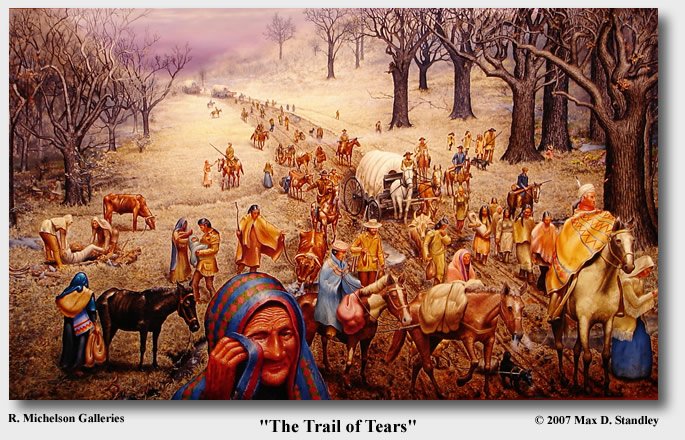
And that is the problem.  We are teaching our younger children incorrect history, giving them part (specifically an anglo-american part) of an intricate story, and sending them on their way... and then middle or high school teachers have to be the 'bad guys' and 're-teach' students.  We have to explain that there have been multiple genocides, not just the one in Germany, and one occurred on the land on which we are currently teaching.  And when we bring this up, teachers are met with anger and disgust from both students and parents.

What isn't mentioned

The question she brought up was why not teach government and other objective topics in grade school.  Let's get students into middle school already knowing the different branches of government, the major historical documents, and how the Constitution is arrange.  Teach them about the electoral college.  Teach them about the different branches and their respective responsibilities.  Have them understand the difference between a democracy and a republic.

I certainly don't have a perfect answer - truth be told this is outside of my area of expertise.  But she did bring up some great points and I'm curious what other educators thing about this opinion.