Saturday, November 28, 2015

History is Many Things, but it is Generally NOT Glitter and Unicorns

I hope everyone (that is those that live and celebrate in the States) had a healthy and happy Thanksgiving!

As the leftovers were being cleaned up, I was reflecting on the year as well as the holiday itself - specifically how it is portrayed in schools.  My daughter is in elementary school and as such she did the typical Thanksgiving celebrations - turkey word searches and decorated pictures of pilgrims.  However, it made me think of something my colleague mentioned this month.

My middle school recently returned from a 4 day trip to Washington D.C.  It was a fantastic expedition during which we visited so many amazing and historical places.  Our students did an amazing job, pushing 13 hour days, over 10 miles of walking, and absorbing as much information as their minds would allow.

We were also part of a wreath laying ceremony at Arlington

The trip also showed our social studies teachers one of the problems with teaching history in American schools.  The focus on curriculum is not where it needs to be.  Students in 7th grade should have a solid understanding about the workings of the US government - the branches, the balance of power, the role of each branch.

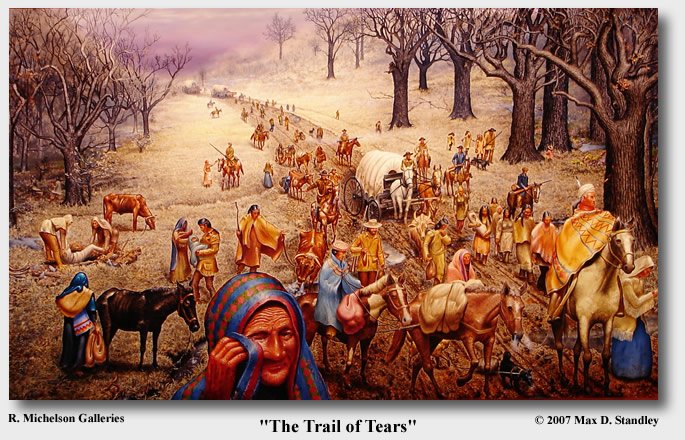
She believes that elementary school students should not be directly taught 'history.'   History is NOT glitter and unicorns.  History is dirty.  Many of the topics are not appropriate for younger students due to their graphic nature.  Events are rarely black and white - good or bad.  Unfortunately elementary school students are not (nor should they be) exposed to this, and so they are raised with a strong cultural bias.

Ask younger grade school students about Columbus and they can tell you all sorts of "facts." He sailed the ocean blue in 1492, he found America, he proved the world was round, he traded with the Indians.  Then the pilgrims came, had a rough go of it, made friends with the Indians, who helped them survive before they vanished in the woodlands.

How we teach it

Unfortunately, many of those 'facts' are not true, and the ones that are are very much open to debate and perspective.  Elementary schools paint a pretty picture of colonization because, appropriately, the truth of how Columbus treated natives shouldn't be presented to 7 year old children.

And that is the problem.  We are teaching our younger children incorrect history, giving them part (specifically an anglo-american part) of an intricate story, and sending them on their way... and then middle or high school teachers have to be the 'bad guys' and 're-teach' students.  We have to explain that there have been multiple genocides, not just the one in Germany, and one occurred on the land on which we are currently teaching.  And when we bring this up, teachers are met with anger and disgust from both students and parents.

What isn't mentioned

The question she brought up was why not teach government and other objective topics in grade school.  Let's get students into middle school already knowing the different branches of government, the major historical documents, and how the Constitution is arrange.  Teach them about the electoral college.  Teach them about the different branches and their respective responsibilities.  Have them understand the difference between a democracy and a republic.

I certainly don't have a perfect answer - truth be told this is outside of my area of expertise.  But she did bring up some great points and I'm curious what other educators thing about this opinion.

Friday, November 20, 2015

Ripcord - Behavioral Managment Systems That Don't Go Splat

Thursday night on #mschat we talked about Social Emotional Learning and its importance in education.  I brought up part our behavior management system, specifically our 'ripcord' system.

During class, students go through a range of emotions - excitement about a new topic, frustration about being the 'only one' in the class that doesn't 'get it', and everything in between.  Our students take a class called 'brainology' where they learn about brain development, learning styles, and how emotions can interfere with learning. They learn that when someone is overstimulated or overwhelmed emotionally,  the amygdala goes into gear and higher function thinking gets shut down.  When this happens, people are more likely to say or do things that they may regret later.

Enter the ripcord.

In skydiving, a ripcord has a specific function - specifically to save you before you go splat.  However, there is a certain timing to pulling your ripcord.  Pull it too soon and you don't get to feel that freefall experience.  Pull it too late and the parachute won't be enough help to save you.

Much like the classic Atari 2600 game. 

This is the analogy our amazing school counselor uses for our students.  When students are overwhelmed emotionally (usually due to anger or frustration, but possibly because they have a laughing fit coming) they are encouraged to pull their ripcord.  We talk about timing when it comes to pulling a ripcord.  Pull it too soon and you won't learn your limits and abilities. Pull it too late and you'll go emotionally splat.

Each classroom has a ripcord area.  In this area are pre-printed sheets.  Students take a piece of paper and express their emotions.  Younger students identify their emotions by circling emojis, and then draw how they feel.  Older ones draw, circle words, or write their own.  The goal is to get them focused on the problem and in the process of doing so, re-connect all parts of their brain.  Once the student has calmed down, their teacher has a conversation with them about how to best return to class.


This system helps on many levels.  It gives students the power of self-management.  It allows students an 'out' before they say or do something that would be unacceptable.  It acknowledges that students (and teachers - yes, we have ripcord rights too!) get frustrated at times and a time-out is sometimes needed.  It also puts the teacher in the role of a coach and ally, not a cop looking to write someone up.

Would this system work in your setting? Please contact me or leave a comment below!

Saturday, November 7, 2015

Where have you been? Mediocreing?

The problem (for me) with blogging is twofold:

a) not having anything to write about because
b) I have so much I WANT to write about.

It becomes an endless cycle of 'list topic, start blog, ohh squirrel!'

Then I realized something.  This is what happens with teaching as well.  By this point of the year we're all 'in our groove', first term (or so) is finished, and we're hitting the main stretch of the school year.

Of course by groove I mean not-being-able-to-get-into-a-rhythm-due-to-all-the-holidays-and-days-off.

It is really easy at this point of the year to just lean back on the culture and routines you've established and just coast through winter break.

"What's the point of getting this fantastic lessons ready when I have a 3 day week then a 4 day week then a 2 day week, then just about two weeks, then winter break? I mean the students are going to be so disengaged that I'll just do this easy lesson and it will basically do the same thing."

Fortunately for you, the amazing teacher inside of all of us is shouting at full lung capacity:

As teachers, we need have many responsibilities, but there are also things we are NOT responsible for doing.  We are not responsible for 'getting through material' with 'easy to create' lessons.  We are responsible for sparking life long learning.  We are not assigned to stuff knowledge into student's heads.  We are assigned for opening, and then blowing up, our students' minds (more on this on my next blog!) 

A big push in education is student engagement.  Are students asking questions? Are they showing grit?  Are they moving up Bloom's taxonomy? 

Here's my question: How can you expect your students to be engaged if the TEACHER isn't engaged?  

You are responsible for your students engagement, and it starts with you.  If you are creating safe lessons, lessons that don't excite you to teach, lessons that you are bored even thinking about, how can you expect your students be engaged to learn?

As Dave Burgess, author of Teach Like A Pirate says, "Safe lessons are a recipe for mediocrity at best."

And you did not wake up today to be mediocre.

Thursday, October 15, 2015

I Was Literally Speechless... And That's Not Easy To Do.

I got into a great discussion on #twitter last week.  It involved 'retakes' and 'grades.'  Specifically the discussion revolved around two questions:

a) should students be allowed to retake quizzes and tests
and
b) what is the maximum grade they should be allowed on a retake.

I already have a post that touches on this topic.  That one is titled Maureen Shouldn't have to Deal with This...  If you have not read this, I would strongly encourage it.


For those of you that have read my blog already know my opinion on this, but I feel it is important to re-address because it came up in a tutoring session as well.  A student, we'll call her Abby, had gotten an unusually low score on a test.  When we looked it over she admitted she did not study for the test, didn't ask questions, didn't prepare... she was not ready for this test and knew the 37% she scored was an accurate reflection of her efforts.

So we looked at the test and analyzed what we needed to work on to improve her score.  We looked at the topics and learning targets and I set up a plan for her to learn the material.  When she looked at the plan she told me she wasn't going to do all of that.  I was kind of taken back because Abby is typically a hard working student.  I was curious and asked her why she didn't like the plan; was it too hard, did she not like the teacher... what was up?

What she told me solidified my belief in retests.

"What's the point of studying all of it? I can only get a 60 on the retake."


Only a 60? So students that need to retake this test only need to know 60% of the material? Are you saying they can ignore 40% of the material?  Two days out of five are not important enough?   "It's not fair to give a kid an 'A' if it takes three tries" is essentially saying, "it's ok if you don't learn this; it's just a number on a piece of paper" (or on a computer in most cases these days.)

I looked at Abby after she said that and was at a loss for words.  As an educator I felt hurt, confused, and frankly a bit connected with her.  She was right - why should she put in the effort and energy of studying all of the material if she wouldn't be recognized for her work?  Why learn all three learning targets when one will get her enough material to max her score on a retake?

I could not on any level try to justify why she should spend hours of her own time reviewing material when her teacher has essentially told her, "it doesn't matter how well you do this next time, it doesn't matter how hard you work or study, you can only get a D-."

I wondered about the learning philosophy of the classroom.  Was the philosophy "you must learn all of this material in this format by this date" or "you must learn this material." I wondered how students could get motivated to study for a test they knew they couldn't get better than a D-.  I wondered how this fostered 'hope' in students.   I wondered how that policy instilled a sense of awe, wonder, and passion of learning in students.  I wondered why this adult was standing in the way of a student's learning instead of pushing them to feel the internal flame to NEED to learn the material.

But most of all I wondered what I could do to get these policies changed.  

Monday, September 28, 2015

#tweet your learning

Processing is one of the most important aspects of learning, and yet is often one of the most overlooked areas of education.  Students need time to reflect on what they have learned, have time to digest new information, and connect it to previously learned material.  Reflection ensures students are fully engaged and making meaning of the material - producers and not just consumers.

Over the next few blogs, I am going to talk about some of my favorite processing tools in the classroom.  These activities allow students to actively internalize information, have them use different cognitive skills during the activity, and have an element of fun or interaction which I also enjoy.

The first activity is "tweet" your learning.  I am not yet at a point where students have active twitter accounts (though I'm working on this!)  However, using a subpage on classtools.net called Twister, students create a tweet to tell me one important fact they learned from the day.

I love this exercise for many reasons.  Students can only give one 'tweet',  and so they only get 140 characters.  They have to be precise with their vocabulary and word choice. They start reflecting on 'what did I learn' and 'how can I summarize this so succinctly.'  Students are actively forced to use different types and levels of metacognition.

When students get to the site they have four fields to complete: name, nickname, tweet, and date.

On the surface, students can write their name their 'nickname' and give a tweet  and a date.  So, in theory a final product could look like this:

This tweet would definitely meet the expectations.  It told me one fact and even had some of the vocabulary we discussed.  While this is all great, one of my favorite aspects of this site is that it comes pre-populated with different images.  If you type a popular name into the real name field, it will use that person's (or creature's) picture in the tweet.  I showed this example to the students:


This tweet also shows comprehension of new concepts, but does so from a different perspective.  The tweet itself shows a dino misinterpreting those darn kids with the actual object in the sky.  The date, 65 million BC, matches the researched date of when the extinction level event occurred.

They then download the tweet as a .pdf and then upload the file into our digital dropbox.

The students really enjoyed this and don't realize how much thinking they are doing.  I got so many wonderful responses.  Here are a couple of student examples:


What would you tweet about what you learned today?  Who would you use as your avatar?

Tuesday, September 22, 2015

26 days - 26 donors for 26 miles

In 26 days I'll be completing my first ever 26 mile run.  I have one more long run, 20 miles, before I start falling back in preparation for the Marathon.

I've been reflecting on the past six months.  The emotions I've experienced over that time have been nothing short of overwhelming.  I've gone from someone that couldn't believe he was running 15 miles in a week to running more than that in a day.  My monthly mileage has increased from about 40 miles to over 120 miles.


Much like my training, when I hit a goal I've celebrated then thought about my next goal.  Eight miles became 10, then 12 and eventually 20.  I've constantly increased my running goal after reaching that goal.   Back in April, when I launched my fundraising page, my goal was $750.  I knew of a few people that would donate and figured that was a great 'stretch' goal.  I was amazed how quickly people supported my cause, hitting that first goal in the middle of May.  I then set goals for $1000, $1200, and $1400, and with the help of so many caring people I reached them all.

So here is my newest goal:  I would love to have 26 new donors in the next 26 days.  It is by far my most ambitious fundraising goal, but considering the growth I've made in six months I feel it is a reachable challenge.  However, much like the support I've gotten from my family and friends, I can't do it alone.


Here is how you can help:

a) Donate if you haven't done so yet.  Every dollar counts.  Donating $1 buys a pair of anti-slip socks for patients. $10 buys 5 boxes of child-friendly bandaids.  $25 buys 5 packs of diapers for premature babies.  All of the funds go to help a child and their family.

b) Share my link.  If you know of people that would love to support this cause, tell them.  About 25% of the people that have donated to my cause are people I had never met before.  It is amazing what humans will do for each other.


You can make a donation by clicking on this link.

If you prefer donating by check, or would like to share my message via paper, you can click here to get a mail in donation form.

I am so grateful for all of you that have donated so far.  Nearly four dozen people have made a financial commitment to my run and Nationwide Children's Hospital.  Some of you are friends, some family, and some of you are people I have never met.  I am so blessed to have so much support in my life.  Thank you to all of you.


Saturday, September 12, 2015

Gaining Perspective on a Geological Scale

Earth has been around a long time. I mean a really long time.  Some people think landing on the Moon or the invention of the digital watch was a long time ago, but Earth hasn't even blinked a metaphorical eye in that time.

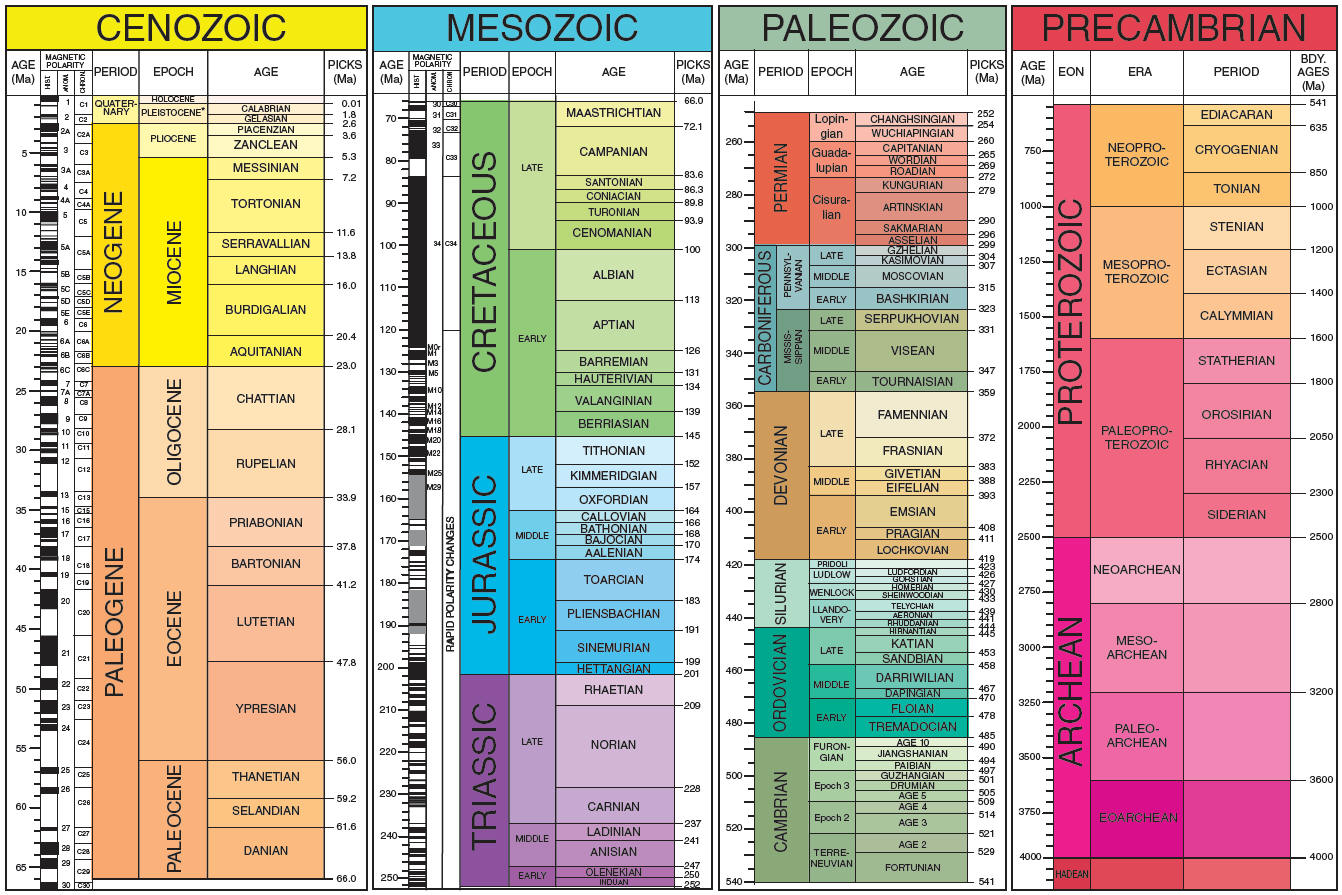
So the question is always how to explain to students what 4.6 billion years of history actually looks like.  Worksheets, articles, and videos all do a decent job, but this year I went a different route.  We started with students investigating various types of geological time words: Eon, era, period, epoch, ages.  We compared those to years, months, days, hours, minutes, and seconds.  Each word connects to a longer period of time and it is possible to say we're living in 2015 as well as saying it is September, or it 5:00 pm.

From there they investigated 4.6 billion years of history in one of three ways: an article, a brainpop video, or the geological timeline.  The goal wasn't to master any of the vocabulary or concepts, but just to get some familiarity with the material.

4.6 billion years of history in an itty bitty space

I ended the lesson by saying to get familiar with one of those three materials because our next session we're doing a lab... and I'm bringing in a time machine.

The next two days they did nothing but ask me about what I meant.  All I told them is "don't be absent otherwise you'll have to build your own time machine and go back in time to see mine!"

Amazingly, I had perfect attendance for my next class.

But first I had to build it.


When students arrived we did a quick entrance ticket on half life and then they got into their guilds to discuss what item they studied and what facts they remember.  Students started discussing many of the vocab words, concepts, and I had to make some clarifications, but overall there was a great supply of knowledge shared.

From there I said we would be going back in time 4.6 billion years.  Each group was given four flags with major events from the geological timeline: fish first appear, dinosaurs first appear, dinosaurs go extinct, humans first appear.   Their task was going to be to place the flag on the correct spot of the timeline.

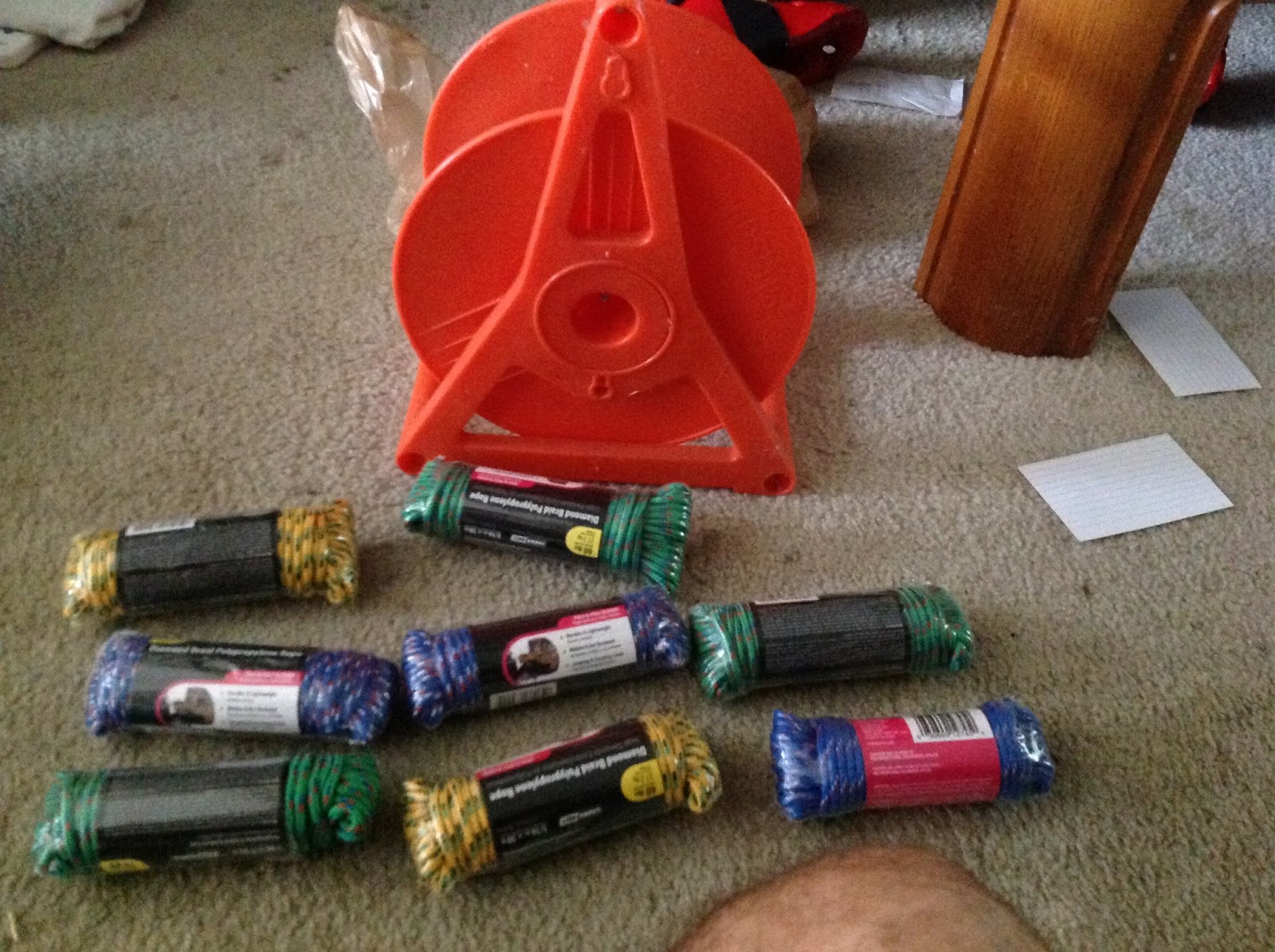
My time machine was definitely a step down from a Delorean

The students went to the playground field and were told we would walk back in time.  As we did we'd see lots of historical events, but their job was to find the four they've been given.  I explained that there were many colors of rope, and that there was an orange piece of tape in the middle of each rope color.  I also gave them a paper with a scale on it: one foot = 12,000,000 years, color changes = 600,000,000 years, end of rope to tape = 300,000,000 years, and tape to tape = 600,000,000 years.

We walked the timeline back and ended 400 feet from the present day, reviewing the scale for the first few tape marks and color changes.  From there I gave them 15 minutes to debate and decide where their flag should go.  Each person was in charge of their own flag, so if there was a disagreement the owner of the flag had the final say.

Then I just let them go.  The debates and discussion was amazing.  Students cited evidence from their reading or video, used visual references from the time line they may have studied, and recalled their previous information to help build their hypothesis.  They were outside with nothing but their flag and their brains - no notes, no computer, just recall - but they were all actively engaged and using evidence. They also were working on disagreeing respectfully - a skill that we practiced the first few days while we were building our classroom culture.


Me standing in present day, my co-teacher about 1 billion years in the past, and dots of children at the birth of Earth.

After 15 minutes we had many different places of the flags.  We talked about which was easier: deciding the order or deciding the placements.  The students made the connections to relative and absolute age from previous lessons and were able to experience how much easier one is than the other.  When I asked how many flags their group put in the right place, all of them predicted zero. 


     Lots of debate on flag placement
 Different color flags represented different groups.

And it led to some fantastic debate

When time was up, students came back to the birth of Earth. I grabbed my meter wheel (top left photo) and we started walking the timeline together.  We examined sixteen major events, with the four they placed among 12 other key items.  

There were so many OMG moments and WHOA I DIDN'T REALIZE comments during the return to present time.  "Before we can have life, the Earth needed a crust... and that took... {walk walk walk} 15 meters, or about 600,000,000 years.  As we passed flags students picked them up to see how accurate they actually were.  

Below is the table I used as we walked the geological timeline.  


We did some processing in the field.  The biggest take away was how long it took for fish to appear.  When we returned to the classroom students completed a 3-2-1 exit ticket involving things they learned, whoa moments, and lingering questions.  Here are some of their responses:

"WHOA" moments:
I never realized how short of a time humans have been around! Dinosaurs were around for like 150 million years but humans have only be around for 2 million!

I knew that humans were the newest flag, but I didn't realize fish have been around for so long!

Life really just started on this planet compared to how old it is!

It took longer for the crust to form than when fish first formed to today!

When life started forming it happened fast! like we did almost the whole timeline before we hit fish but then it was like every meter we stopped!

and my favorite:

At one point algae was the highest form of life on this planet. 

What do you want for dinner? SUNLIGHT? MY FAVORITE!